Christopher McCandless: American Hero?

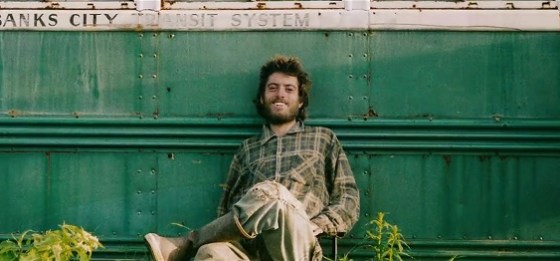
Who is Christopher McCandless? He’s an enigma, an idea, a philosophy.

In the early 90s, Chris abandoned his life in search of something more meaningful than the materialistic society in which he found himself a prisoner. After graduating with honors from Emory College in Atlanta, Chris donated his life savings to charity and embarked on a trip around the country without telling anyone where he was going.

Soon after leaving, Chris abandoned his car, burnt all of his money, and spent the next two years hitchhiking around the United States, eventually making his way to Alaska. In April, Chris was dropped off near Denali National Park, where he hiked into the wilderness. Four months later, a hunter found his lifeless body wrapped inside his sleeping bag.

Before his death, Chris found the ironic truth he’d set out to find in the Alaskan wilderness, which was left scrawled in his journal:

“Happiness is only real when shared.” ~ Christopher McCandless

The legacy of Chris lives on in the hearts of many, myself included. The desire for simplicity, to be free of expectations and demands from society, to seek freedom, truth, beauty, and meaning. Purpose. In these ways, Chris represents everything right about humanity: the purity of his intentions, the raw idealism of his plans, the honest belief in himself. He followed his heart, and died chasing a dream.

Chris has become an icon, and he will forever represent an idealism found only in the innocence of youth. The legacy of Chris McCandless is one of hope. I think people need that.

If you want to learn more about Christopher and his inspiring (and heartbreaking) story, check out the book Into the Wild by Jon Krakauer.
Think for Yourself. Question Authority.

Throughout human history, as our species has faced the frightening, terrorizing fact that we do not know who we are or where we are going in this ocean of chaos, it has been the authorities – the political, the religious, the educational authorities – who attempted to comfort us by giving us order, rules, regulations, informing – forming in our minds – their view of reality. To think for yourself you must question authority and learn how to put yourself in a state of vulnerable open-mindedness, chaotic, confused vulnerability to inform yourself. ~ Timothy Leary

An Inconvenient Truth

I don’t know about you, but I like being right. When I’m arguing with someone and I know they’re wrong, it feels good! And (maybe not surprisingly) I feel like I’m right most of the time. But how would I know if I’m wrong about something?

What’s it feel like to be wrong?

When we’re wrong, we don’t know we’re wrong. And if we don’t know we’re wrong, being wrong must feel exactly the same as being right. That makes it pretty difficult to know when we’re right about something, and when we’re wrong. So if being wrong feels the same as being right, chances are I’m wrong about something at least once in a while…probably more often than I can imagine.

I suppose we all are. And why wouldn’t we be?

We do nothing to challenge our beliefs. We surround ourselves with people who have the same values and opinions as us. We gather information from sources that reinforce our biases. Those whose opinions differ from our own are brushed off, regardless of the validity of their argument. We spend our lives thinking we know best. That our choices are superior than those of others. We believe we know better than everyone we encounter who has a different way of thinking, a belief system that’s inconsistent with our own, or whose political persuasion conflicts with the “truths” that we consider to be self-evident.

But can we be right all of the time? About everything? Is it possible that maybe, just maybe, we’re not quite as smart as we think? That despite our best intentions, our perception is all wrong? Maybe there’s another way of thinking about things. A way that’s different, but equally valid…

As smart as we are, we won’t always be right, which is why we need to keep an open mind and be willing to look at things from another angle and through a different filter. Our biases keep us locked into a very specific, and very limited way of thinking. Our political persuasion predisposes us to a certain way of thinking. Our filters and biases are why some people see art, while others see pornography. (Which do you see? Leave a comment below.)

Truth is subjective.

And if truth is subjective, does that mean our beliefs are no more (or less) valid than those of people who believe exactly the opposite? In the photo above, did you see art or pornography? Why did you see what you saw, and why can another person look at the same photo and see something different? We can look at the same photo but see different things because our biases and filters color our perception of reality. Of what is, and what isn’t. Of what’s right and what’s wrong. Moral and immoral.

But what we see through our filter doesn’t make it so. It’s only interpretation…our interpretation. What we believe to be truth is our perception based on past experiences and current beliefs. Others may have a different interpretation.

The next time you feel absolute in your opinion, ask yourself if it’s possible you could be wrong. You just might be.

(Everything I’ve written here is my interpretation of truth. Your interpretation may vary.)