
 In my continuing exploration of thrift I oftentimes find myself wondering how we’ve gotten to where we are today. As a nation, we used to place an emphasis on the virtues of hard work, thrift and frugality. We took pride in our possessions. Today we consume twice as much as we used to 50 years ago however our Gross National Happiness has continued to decline during that time period.
It all begins at the end of World War II when a push towards television advertising changed the way advertisers campaigned for business. By 1955 there were 30 million household with television sets. Advertisers now had a captive audience which it could work to sell a generalized perception of consumption. It worked to sell a higher standard of living.
What does all of this mean? According to Victor Lebow’s 1955 article in the Journal of Retailing titled “Price Competition in 1955”:
The measure of social status, of social acceptance, of prestige, is now to be found in our consumptive patterns. The very meaning and significance of our lives today expressed in consumptive terms. The greater the pressures upon the individual to conform to safe and accepted social standards, the more does he tend to express his aspirations and his individuality in terms of what he wears, drives, eats…”
We’ve been sold this idea of success through years of intentional marketing. For decades businesses have been working to create social pressure in order to get us to conform to the standards which they have defined in order to sell us their products. We’ve been taught that in order to be accepted by society we must consume. Each day we are the targets of 3,000 advertisements telling us to eat here, drive this car, wear these clothes.
Marilyn Manson discusses how the media creates fear which in turn causes us to consume:
…You’re watching television, you’re watching the news; you’re being pumped full of fear…There’s floods, there’s AIDS, there’s murder…Cut to commercial; buy the Acura, buy the Colgate. If you have bad breath, they’re not gonna talk to you. If you got pimples, the girl’s not gonna fuck you. It’s a campaign of fear and consumption. And that’s what I think it’s all based on; [this] whole idea [of]: ‘Keep everyone afraid, and they’ll consume.'”
For more than half a century we have been sold this story of conformity through consumption. It is no surprise how our society today values material possessions far more than we did even 50 years ago. Ironically, if there were to be a widespread conversion back to thrift and frugality, our economy would suffer. This is called the Paradox of Thrift. Our economy is set up on the basis that we will consume at a certain level, and if there is a shift towards frugality on a widespread scale, the economy will retract. Sound familiar? Its what is happening today.
The problem is that our spending rate is not sustainable and we must return to a more frugal way of life. Of course, no one is going to tell you that you need to save your money. As a matter of fact, most people will tell you to spend in order to boost the economy. These people are not concerned with the long-term viability of our economy. They are more concerned with boosting the numbers of the market today.
Now is a great time for us to return to the values of our grandparents; things like thrift, frugality and being thankful for what we have instead of concerning ourselves with what we don’t.
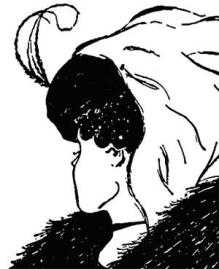 I have a tendency to have a narrow focus and sometimes I need a reminder that I am not always right. One way that I accomplish this is by hanging this sketch on the door of my refrigerator. How does this remind me that I am not always right? Even though the drawing is in black and white, different people see different things. Some see an attractive young lady while others see a haggard old woman. The picture is the same for all who see it, though the information taken away is not so black and white. This is how I remind myself that I am not always correct, and that there may be another way of looking at the question or situation.
 Hundred Goals | Inspiration to Live Your Dream